
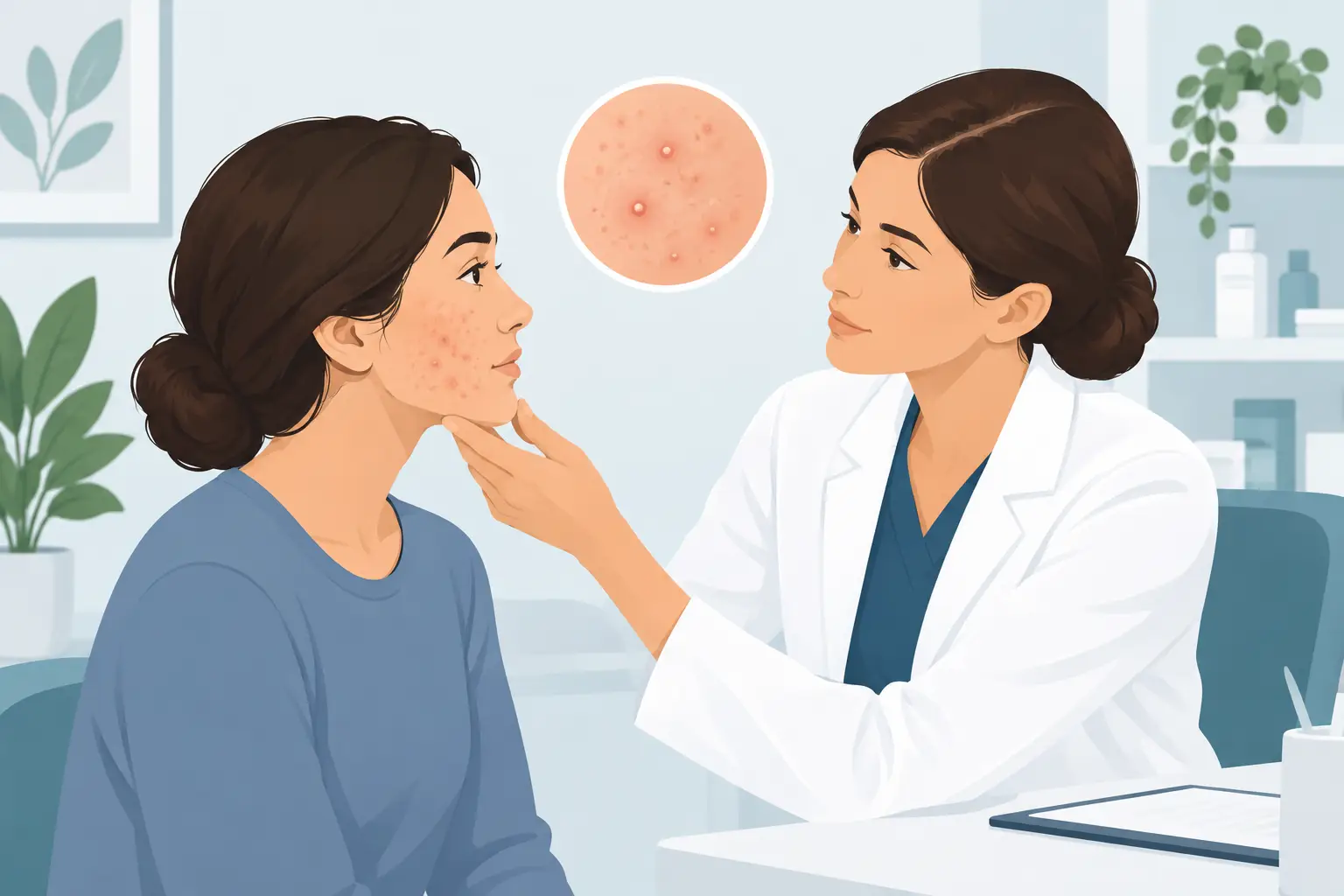
A breakout before a major presentation or event can feel frustrating. Acne that persists through your 20s, 30s, 40s, or beyond can feel even more personal, particularly when you have already invested in thoughtful skincare and still see painful bumps, clogged pores, or lingering dark marks. A dermatologist for adult acne looks beyond the surface to identify the factors affecting your skin and create a plan that is medically sound, realistic, and tailored to your life.
Adult acne is common, but it is not something you simply need to tolerate. With the right diagnosis and consistent treatment, many patients can achieve clearer, calmer skin while reducing the risk of permanent scarring.
Why Adult Acne Can Be Different
Adult acne often follows a different pattern than teenage acne. Instead of widespread oiliness and breakouts across the forehead and cheeks, adults may develop deeper, tender bumps along the jawline, chin, and lower face. Some experience cyclical flares around their menstrual period, while others notice a change after stopping or starting hormonal contraception, beginning a new medication, or moving through a stressful period.
Hormones are one possible contributor, but they are rarely the whole story. Genetics, skin oil production, inflammation, friction from masks or athletic equipment, hair products, makeup, and overly aggressive skincare can all play a role. A routine packed with exfoliating acids, scrubs, and drying spot treatments may leave skin irritated and compromise its protective barrier, making acne appear more inflamed.
Not every acne-like eruption is actually acne. Rosacea, perioral dermatitis, folliculitis, contact dermatitis, and certain medication reactions can resemble breakouts. This is one reason professional evaluation matters. Treating the wrong condition with the wrong active ingredient can delay improvement and cause unnecessary irritation.
When to See a Dermatologist for Adult Acne
It is reasonable to seek dermatology care when acne is painful, leaving scars or dark marks, affecting your confidence, or not responding after several months of over-the-counter treatment. You do not have to wait until your acne is severe. Earlier treatment can be especially valuable if you develop nodules or cysts, which are more likely to leave permanent textural scars.
A dermatologist can also help when your breakouts have changed suddenly. New or worsening acne accompanied by irregular periods, excess facial hair, scalp hair thinning, or weight changes may warrant discussion of an underlying hormonal concern. Dermatologic care does not replace primary care or gynecologic evaluation when indicated, but it can be an important part of a coordinated approach.
Pregnancy, breastfeeding, and plans to become pregnant are equally important to discuss. Several highly effective acne medications are not appropriate during pregnancy, so your plan should be adjusted carefully rather than paused without guidance.
What a Thoughtful Acne Evaluation Includes
An effective appointment starts with more than a quick look at your skin. Your clinician will evaluate the type and distribution of acne, whether marks represent active inflammation or scarring, and how your skin responds to products and past treatments. They may ask about your menstrual cycle, medications and supplements, family history, stress, sleep, shaving or hair-removal habits, and the cosmetics or hair products you use regularly.
Bring a clear list of your current routine, including prescription products, supplements, and products that seem harmless, such as facial oils or pomades. Photos can also help if your skin fluctuates and happens to be clear on the day of your appointment.
The goal is not to prescribe every possible treatment at once. It is to choose a regimen that addresses the dominant cause of your acne while respecting your skin sensitivity, schedule, health history, and preferences. A busy professional who travels frequently may need a straightforward routine with minimal irritation. Someone with cystic acne and scarring may benefit from a more intensive plan and closer follow-up.
Treatment Is Usually Layered, Not One-Size-Fits-All
Acne responds best to a strategy that targets clogged pores, bacteria, inflammation, and, when relevant, hormonal influence. Treatment often begins with topical medication. A topical retinoid can help prevent clogged pores and improve skin texture over time. Benzoyl peroxide reduces acne-causing bacteria and can be helpful for inflammatory breakouts, while topical antibiotics may be used selectively and typically alongside benzoyl peroxide to limit antibiotic resistance.
For persistent inflammatory acne, oral medication may be appropriate. Short courses of oral antibiotics can reduce inflammation, but they are not intended as a long-term standalone solution. Your dermatologist will usually pair them with topical maintenance treatment and reassess progress rather than continuing them indefinitely.
Hormonal treatment can be particularly helpful for women with jawline acne, cyclical flares, or breakouts that persist despite a strong topical regimen. Depending on your medical history, options may include certain oral contraceptives or spironolactone. These medications are not right for everyone and require a conversation about potential side effects, monitoring, and pregnancy prevention.
For severe, scarring, or treatment-resistant acne, isotretinoin may offer the most meaningful long-term improvement. It is a highly regulated medication with specific safety requirements and follow-up needs, but for the right patient, it can be transformative. A board-certified dermatologist can explain the expected course, laboratory monitoring when appropriate, side effects, and safeguards in clear terms.
Procedures Can Support Medical Treatment
Procedures have a role in adult acne care, but they should be selected carefully. A corticosteroid injection can rapidly calm an isolated, painful cyst and may help reduce the chance of scarring. Professional extractions may be useful for stubborn blackheads and whiteheads when performed by a trained clinician.
Chemical peels and certain light- or laser-based treatments may help with superficial congestion, redness, and post-acne discoloration for selected patients. However, procedures are not a replacement for controlling active acne at its source. Treating pigmentation or texture before new breakouts are under control can be disappointing and may require repeated treatment.
Acne scars deserve their own plan. Dark marks often fade with time and targeted topical treatment, but indented scars generally require procedures such as microneedling, fractional laser resurfacing, subcision, or carefully placed filler. The best approach depends on scar type, skin tone, downtime preferences, and whether acne is still active. At McLean & Potomac Dermatology and Skincare Center, this continuity between medical acne care and advanced aesthetic treatment allows the plan to evolve as your skin does.
The Skincare Routine That Supports Your Results
Prescription treatment works better when the surrounding routine is simple and consistent. Cleanse gently, use a non-comedogenic moisturizer, and wear broad-spectrum sunscreen daily. Sunscreen is especially important because inflammation and UV exposure can deepen post-acne discoloration, and several acne treatments increase sun sensitivity.
Avoid picking or squeezing lesions. It can be tempting to address a visible blemish immediately, but manipulation pushes inflammation deeper and increases the risk of dark marks and scars. It is also wise to introduce only one new active product at a time. If you begin a retinoid, acid exfoliant, acne wash, and vitamin C serum in the same week, irritation can make it difficult to tell what your skin actually tolerates.
Diet is more nuanced than the promise of a single acne-free meal plan. Some people notice that high-glycemic foods or dairy products correlate with flares, while others do not. A dermatologist can help you consider patterns without unnecessarily restricting your diet or blaming yourself for a medical condition.
Give Treatment Enough Time, Then Reassess
Most acne treatments need eight to 12 weeks to show a meaningful change, and some retinoids cause temporary dryness or mild flaking during the adjustment period. That does not mean you should push through severe burning, swelling, or peeling. Contact your dermatology team if irritation is significant so the regimen can be adjusted.
Follow-up matters because acne changes. Once active breakouts improve, treatment may shift toward maintenance, dark-mark prevention, or scar correction. If your first plan does not deliver the expected results, that is useful clinical information, not a failure. The next step may be changing the formulation, addressing a hormonal component, confirming the diagnosis, or considering a different level of treatment.
Clearer skin is not about chasing perfection. It is about having a plan that respects the health of your skin, protects your confidence, and gives you a trusted place to turn when acne no longer fits the life you want to lead.