
A mole that has been unchanged for years can look very different in a few months. A rough patch that seems like dry skin may not heal. These are the subtle changes an experienced eye is trained to evaluate, often before a concern becomes urgent. This guide to annual skin exams explains how a professional skin check works, who benefits most, and how to make your visit more meaningful.
What an Annual Skin Exam Is Designed to Do
An annual skin exam is a focused medical evaluation in which a dermatology provider examines your skin for signs of skin cancer and other concerning changes. It is not simply a search for dark moles. Basal cell carcinoma, squamous cell carcinoma, and melanoma can appear in many forms, including pearly bumps, nonhealing sores, scaly areas, or spots that are pink, red, brown, black, or skin-colored.
During a full-body exam, your provider may evaluate areas that are difficult to see on your own, including the scalp, ears, back, buttocks, between the toes, palms, soles, and nails. These areas matter. Melanoma can develop where there has been little obvious sun exposure, and skin cancer does not always follow the rules patients expect.
The visit is also an opportunity to discuss personal patterns that affect your skin health, such as a history of blistering sunburns, tanning bed use, outdoor activities, medications that suppress the immune system, or a family history of melanoma. Your dermatologist considers the full picture, not a single spot in isolation.
Who Should Have a Yearly Skin Check?
For many adults, a yearly professional exam is a sensible preventive-care habit, particularly in the Washington, DC area, where busy schedules can make it easy to overlook gradual changes. However, the right timing is personal. Some patients need more frequent surveillance, while others may be advised to return on a different schedule based on their risk profile and skin findings.
Yearly exams are particularly valuable if you have had skin cancer or atypical moles in the past; have a close relative with melanoma; have many moles, fair skin, freckles, or light eyes; have experienced intense sun exposure or blistering burns; use or have used tanning beds; or take medications that affect immune function. A history of organ transplant, radiation treatment, or certain genetic conditions can also increase risk.
Children and teens do not always need routine full-body exams at the same interval as adults, but a changing mole, a strong family history, or a provider’s recommendation warrants attention. Parents should also teach children that new or changing spots are worth mentioning, without creating unnecessary alarm.
What Happens During a Professional Skin Exam
A skin check is usually straightforward and private. You will be asked about new, changing, itching, bleeding, or painful spots, as well as any personal or family history that may be relevant. Depending on the reason for your visit and your preferences, you may change into a gown so the provider can examine areas that clothing normally covers. Draping is used to preserve your comfort and privacy.
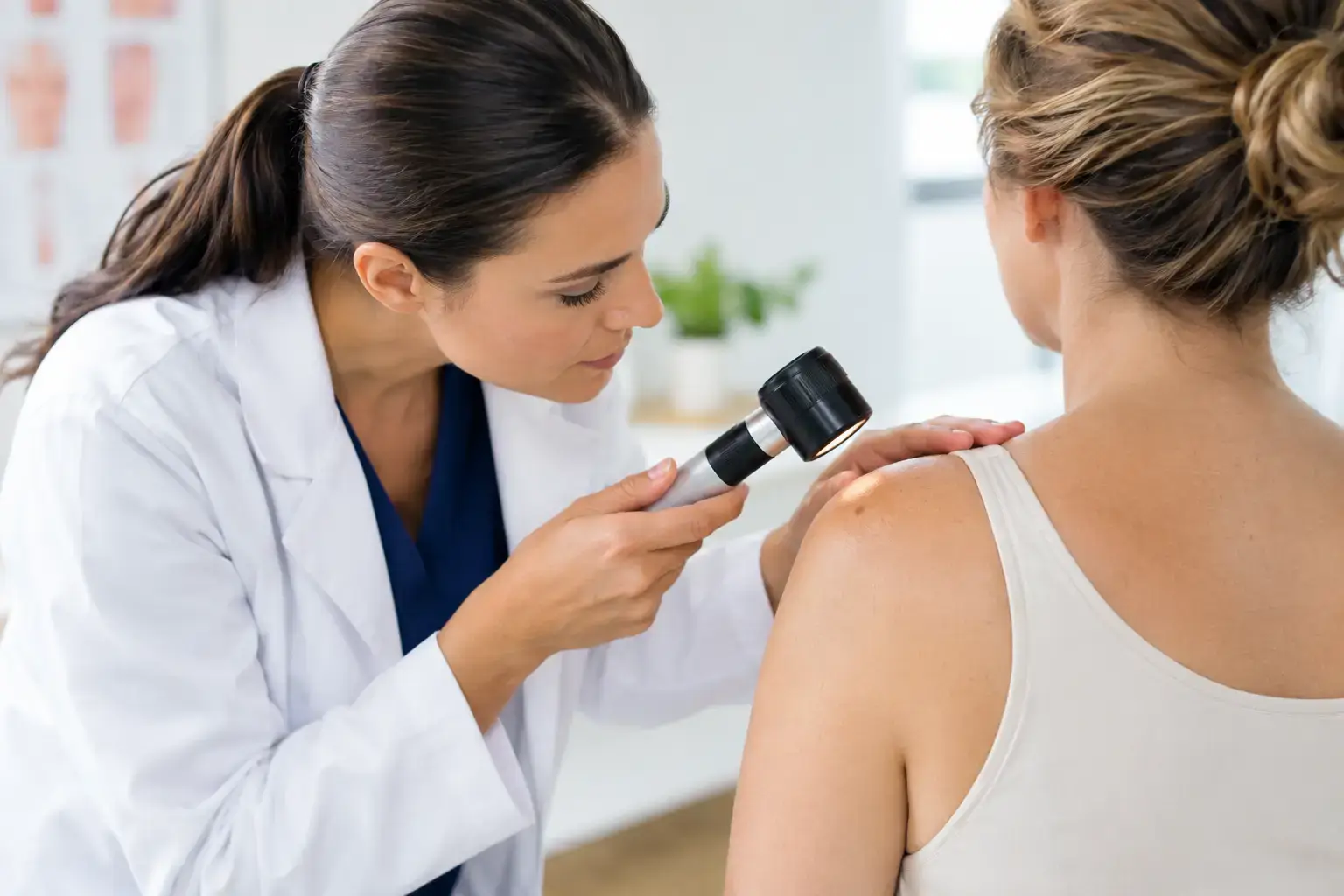
Your dermatologist or credentialed advanced-practice provider will visually inspect the skin from head to toe. A handheld dermatoscope may be used to magnify and illuminate a mole or lesion. This device allows the provider to see pigment patterns and structures beneath the surface that are not visible to the naked eye.
If a spot looks suspicious, the next step is not always immediate removal. Your provider may photograph it, measure it, compare it with other lesions, recommend close observation, or perform a biopsy. A biopsy involves removing a small sample or the entire lesion for laboratory evaluation. It is the only way to confirm whether a lesion is cancerous.
This is one reason professional evaluation matters: a spot can appear concerning and prove benign, while another can look deceptively ordinary. Dermatology combines pattern recognition, clinical history, and, when necessary, pathology to reach the right diagnosis.
The ABCDEs Are Helpful, but Not the Whole Story
The ABCDE framework is a useful at-home screening tool for pigmented lesions. Look for asymmetry, irregular borders, uneven color, a diameter larger than about one-quarter inch, and evolution or change over time. Evolution is often the most meaningful sign. A mole that grows, darkens, becomes raised, crusts, bleeds, or begins to itch deserves prompt evaluation.
Still, do not rely on the ABCDEs alone. Some melanomas are small, pink, or skin-colored. Other skin cancers may resemble a pimple, eczema patch, scar, or sore that repeatedly heals and returns. The ugly duckling sign is also helpful: if one spot looks noticeably different from your other moles, have it checked.
How to Prepare for Your Annual Skin Exam
You do not need to do extensive preparation, but a few thoughtful steps can help your provider focus on what matters. Come with clean skin when possible. Heavy makeup, self-tanner, nail polish, and opaque camouflage products can make assessment more difficult, especially if you have a concern on the face, nails, hands, or feet.
Before the visit, make a brief note of spots you have noticed and when they changed. If a lesion comes and goes, a dated photograph can be useful. Also bring information about previous biopsies, prior skin cancers, relevant family history, and medications or supplements you take.
If you are visiting for a full-body exam, consider these practical details:
- Avoid applying self-tanner shortly before your appointment.
- Remove nail polish if you have noticed changes around or beneath a nail.
- Wear your hair in a way that allows the scalp to be examined easily.
- Tell your provider about spots in intimate areas, even if they feel awkward to mention.
- Ask whether a partner has noticed a changing lesion on your back or scalp.
A skin exam is also the right time to raise other concerns, such as persistent acne, rosacea, eczema, hair shedding, melasma, sun damage, or a rash that has not responded to over-the-counter care. Your skin is interconnected, and a comprehensive dermatology practice can help prioritize preventive care alongside treatment and aesthetic goals.
When Not to Wait for Your Next Annual Visit
An annual schedule should never delay evaluation of an active concern. Contact a dermatology office sooner if you notice a new or changing mole, a lesion that bleeds without clear injury, a sore that does not heal within several weeks, rapid growth, persistent tenderness, or a dark streak under a nail that is new or widening.
The same applies to a spot that becomes repeatedly scaly, crusted, itchy, or painful. Many of these changes have benign explanations, but waiting for a routine exam can add unnecessary uncertainty. Early assessment gives you clarity and, if treatment is needed, more options.
Skin Checks Work Best Alongside Daily Prevention
A professional exam does not replace your own awareness or sun protection. Monthly self-checks help you recognize what is normal for your skin. Choose a well-lit room, use a full-length and hand mirror, and ask for help checking your scalp and back. Photographs can be useful for tracking a specific spot, but they are not a substitute for an in-person diagnosis.
Daily broad-spectrum sunscreen, protective clothing, sunglasses, shade, and thoughtful timing around peak sun hours all reduce cumulative ultraviolet exposure. If you spend time outdoors for work, sports, travel, or family activities, consistency matters more than perfection. Reapply sunscreen when needed, and remember that incidental exposure during driving, walking, and errands adds up over time.
At McLean + Potomac Dermatology and Skincare Center, board-certified dermatologists can help establish a screening plan that reflects your skin, history, and goals. The most reassuring outcome of a skin exam is often confirmation that a spot is benign. The most valuable outcome is finding a concern early enough to address it with precision. Make space on your calendar for the care your skin deserves, then let that appointment become a confident, lasting habit.