
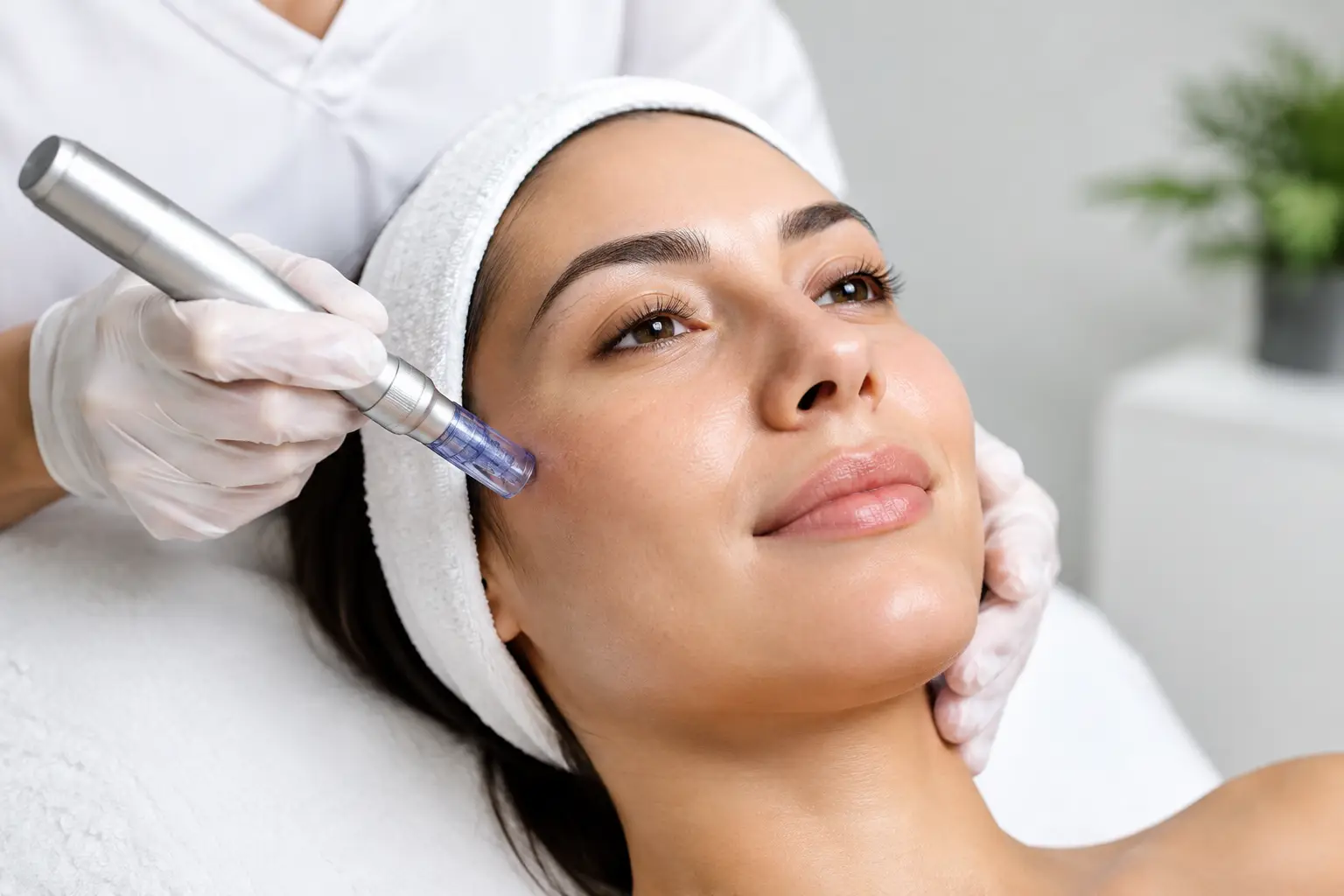
Large pores rarely appear alone. They often arrive with excess oil, lingering acne marks, uneven texture, or early collagen loss that makes the skin look less refined. The phrase microneedling large pores treatment is commonly searched by patients who want smoother-looking skin without changing their natural features. Microneedling can be an effective option for the right candidate, but the best results begin with an accurate understanding of what pores are and what treatment can realistically improve.
Why Pores Can Look Larger
Pores are normal openings in the skin that allow oil and sweat to reach the surface. Their actual size is largely determined by genetics, but their appearance can become more noticeable for several reasons. Increased oil production can make pores look wider, while blackheads and buildup may stretch the opening. Acne inflammation can alter surrounding tissue, and sun exposure and age-related collagen loss reduce the skin’s natural support around each pore.
This distinction matters because no treatment permanently eliminates pores. A thoughtful cosmetic plan instead focuses on improving the factors that make them stand out: uneven texture, congestion, excess shine, acne scarring, and laxity around the pore opening. When skin is smoother and collagen is better supported, pores often look less visible.
How Microneedling for Large Pores Works
Microneedling uses a device with very fine, sterile needles to create controlled microchannels in the skin. These precise channels activate the body’s natural repair response, encouraging collagen and elastin production over time. As new collagen develops, the skin can become firmer, more even in texture, and better able to reflect light smoothly. This is why pores may appear refined after a series of treatments.
The treatment is especially useful when enlarged-looking pores are connected to textural concerns, mild acne scarring, or early signs of collagen loss. It does not stop oil glands from producing sebum, so a patient whose primary concern is significant oiliness may also need a medical skincare routine or other acne-focused care.
At McLean & Potomac Dermatology and Skincare Center, treatment planning begins with the whole picture of your skin, not a single concern viewed in isolation. A board-certified dermatologist or qualified provider can evaluate whether large pores are being driven by active acne, congestion, sun damage, acne scars, rosacea, or a combination of concerns. That evaluation helps determine whether microneedling is the right starting point and how it should fit into a personalized plan.
What Happens During Treatment
Before microneedling, the skin is cleansed and a topical numbing cream is typically applied to maximize comfort. Once the skin is numb, the provider passes the microneedling device over the treatment area at settings selected for your skin type, goals, and tolerance. The procedure itself is generally efficient, though appointment length varies based on the areas being treated and the preparation involved.
Afterward, the skin may look pink to red and feel warm, similar to a mild sunburn. Some patients experience temporary tightness, dryness, or mild swelling. Most redness improves within a few days, although recovery can be longer when deeper settings are appropriate for acne scars or more significant texture concerns.
For the first day or two, patients should treat the skin gently. Avoid makeup until your provider advises it is appropriate, skip intense exercise and heat exposure, and use only the post-treatment products recommended for you. Daily broad-spectrum sunscreen is essential, particularly as the skin heals.
Who Is a Good Candidate for Microneedling Large Pores Treatment?
Many adults seeking a more polished skin texture are candidates, especially those with visible pores on the cheeks, nose, forehead, or chin. Microneedling can be performed on a range of skin tones when treatment settings and aftercare are chosen carefully. It may also appeal to patients who prefer gradual, natural-looking improvement rather than a dramatic change after one visit.
However, timing matters. Active, inflamed acne may need to be controlled before microneedling, since treating over irritated breakouts can worsen inflammation. A provider may recommend postponing treatment if you have an active skin infection, open wounds, a current cold sore outbreak in the treatment area, or a history of unusual scarring. Pregnancy, certain medications, recent isotretinoin use, and a tendency toward post-inflammatory hyperpigmentation should also be discussed during consultation.
Patients with melasma or deeper skin tones deserve particular attention to treatment technique and home care. Microneedling can be appropriate, but overly aggressive treatment or inadequate sun protection can contribute to unwanted pigment changes. Dermatologist-guided care helps balance meaningful improvement with skin safety.
When Will You See Results?
Some patients notice an early glow or smoother feel as initial redness resolves. The more meaningful changes take longer because collagen remodeling is gradual. Improvements in texture and the appearance of pores often become clearer over four to six weeks, with continued refinement in the months that follow.
A single treatment can refresh the skin, but a series is commonly recommended for visible pores and textural concerns. The right number of sessions depends on your starting point, the presence of acne scars, and how your skin responds. Treatments are usually spaced several weeks apart to allow healing and collagen development between visits.
Results also depend on the daily choices that protect your investment. Consistent sunscreen, non-comedogenic skincare, appropriate use of retinoids when advised, and management of acne or oiliness all help maintain a clearer, more refined appearance. There is no single procedure that replaces a well-designed skincare routine.
Microneedling Alone or a Combination Plan?
Microneedling is not automatically the best standalone treatment for every type of enlarged-looking pore. If clogged pores and blackheads are prominent, professional extractions, acne management, or a carefully selected exfoliating regimen may be needed first. If sun damage, redness, or pigment irregularity is a major concern, light-based treatments such as IPL or laser resurfacing may be considered as part of a broader plan.
For patients with deeper acne scars or more pronounced texture changes, a provider may recommend combining microneedling with other collagen-stimulating or resurfacing treatments at appropriate intervals. The trade-off is that more intensive options may offer stronger correction but can require additional downtime and may not suit every skin type. An individualized plan should account for your lifestyle, upcoming events, budget, skin sensitivity, and tolerance for recovery.
Choosing Safe, Thoughtful Care
Microneedling is widely performed, but it is not a one-size-fits-all facial. Needle depth, technique, device quality, sterility, and post-treatment guidance all influence both results and safety. At-home rollers and unregulated devices cannot provide the precision, sanitation, or clinical assessment available in a dermatology setting, and improper use may cause irritation, infection, or pigment changes.
A consultation is also an opportunity to ask direct questions: What is causing my pores to look enlarged? Is active acne contributing? How many treatments are likely to help? What downtime should I plan for? Clear answers help you make a confident decision and set expectations that align with your skin rather than a filtered image.
The goal is not poreless skin. It is skin that looks healthy, smooth, and well cared for, with a treatment plan designed around what your skin needs to thrive.