
A widening part, more scalp showing through at the crown, or a ponytail that suddenly feels thinner can be deeply unsettling. PRP hair restoration for women offers a physician-guided option for certain forms of thinning, using concentrated components from your own blood to support the hair follicles that remain. It is not a one-size-fits-all answer, and the most meaningful first step is identifying why your hair is changing.
What Is PRP Hair Restoration for Women?
Platelet-rich plasma, or PRP, is prepared from a small sample of your blood. The sample is placed in a centrifuge, which separates and concentrates platelets and plasma. Platelets contain signaling proteins called growth factors that are involved in tissue repair and cell communication.
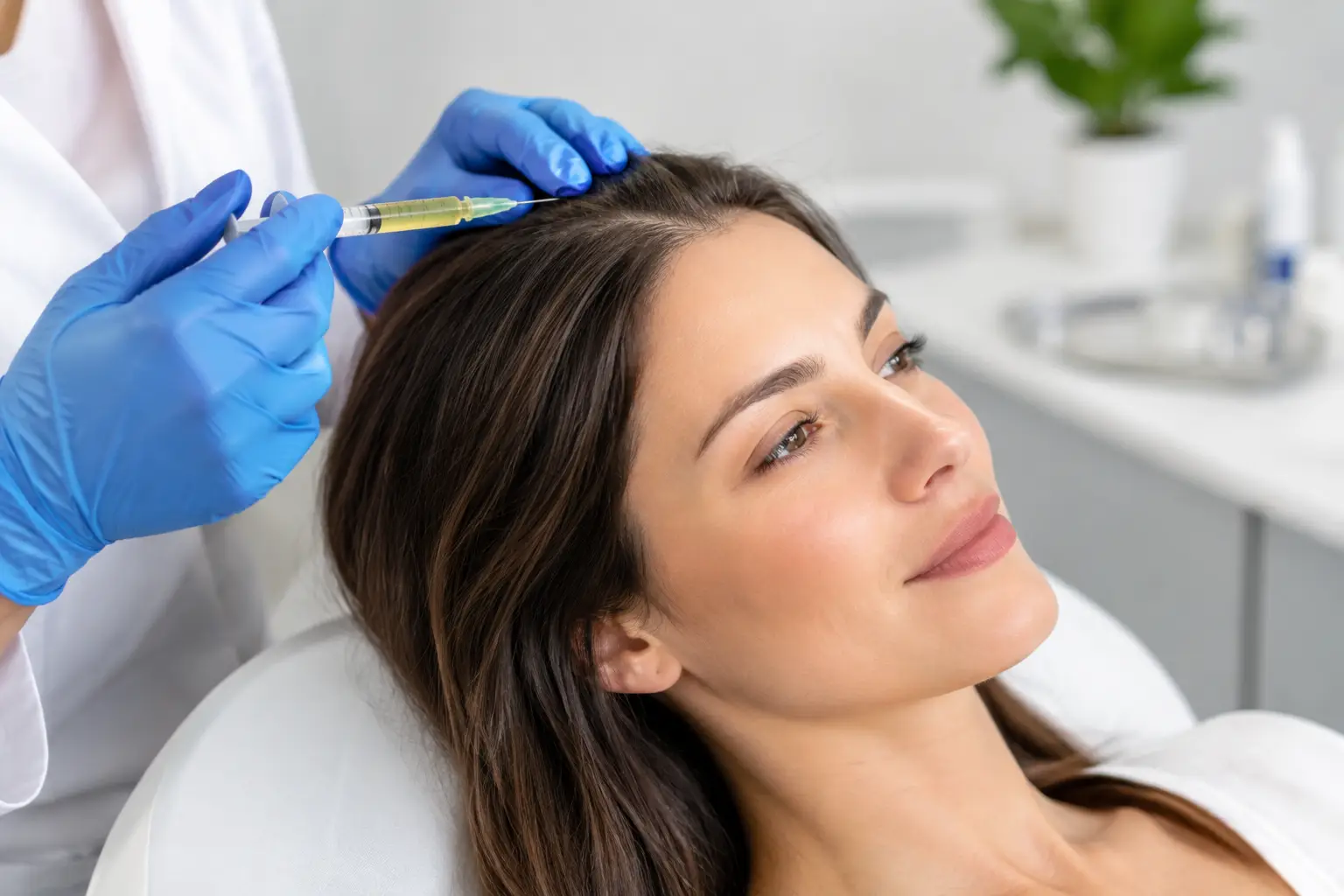
For hair restoration, the concentrated plasma is injected in a pattern across areas of thinning on the scalp. The goal is to create a more supportive environment for follicles that are becoming smaller or spending too much time in the resting phase of the hair-growth cycle. In appropriate candidates, PRP may help improve hair density, shaft thickness, and shedding over time.
PRP does not create new follicles or reliably restore areas that have been bald for many years. Its role is generally to preserve and strengthen vulnerable, still-active follicles. That distinction matters when setting realistic expectations.
Why Hair Loss in Women Requires a Diagnosis First
Hair thinning in women is common, but it is not a diagnosis by itself. Female pattern hair loss often appears as gradual widening along the center part or diffuse thinning through the crown while the frontal hairline remains relatively intact. Genetics and hormonal sensitivity can contribute, and the process may progress gradually over years.
Other causes need a different approach. Telogen effluvium, a type of diffuse shedding, can occur several months after illness, surgery, significant stress, childbirth, rapid weight loss, or a major change in medications. Low iron stores, thyroid disorders, nutritional deficiencies, autoimmune disease, and certain scalp conditions can also affect hair growth.
A dermatology evaluation can distinguish between these possibilities through a detailed history, scalp examination, and, when appropriate, laboratory testing or a biopsy. This is particularly important if hair loss is sudden, patchy, accompanied by itching, burning, tenderness, or scaling, or if the scalp looks shiny in areas where hair has been lost. Some inflammatory and scarring alopecias can cause permanent follicle damage without prompt treatment.
Who May Be a Good Candidate for PRP?
PRP is often considered for women with early to moderate female pattern hair loss and visible thinning in areas where follicles are still present. It may also be a useful addition after a shedding episode has been evaluated and the underlying trigger is being addressed.
The best candidates usually have realistic goals and are prepared for a gradual process. Hair grows slowly, and changes are measured in months, not days. A patient may notice less shedding first, followed by improved fullness or a healthier appearance to the hair over subsequent months.
PRP can be especially appealing for patients who prefer an in-office treatment that uses their own blood product rather than a daily prescription alone. Still, it is not automatically the best choice for everyone. Results can be limited when thinning is advanced, follicles have been permanently damaged, or an untreated medical contributor is driving the shedding.
Pregnancy, breastfeeding, bleeding disorders, active scalp infections, certain platelet disorders, and the use of some medications may affect whether treatment is appropriate. Your dermatologist will review your health history, medications, and goals before recommending a plan.
What a PRP Hair Treatment Appointment Is Like
The treatment begins with a blood draw, much like routine bloodwork. After the blood is processed, the clinician prepares the PRP for injection. The scalp is cleansed, and a topical anesthetic or other comfort measures may be used based on the treatment plan.
Using a series of small injections, the provider places PRP into targeted areas of thinning. Most appointments are completed in under an hour, though timing varies by practice and the areas being treated. Patients commonly describe pressure or brief pinching during injections, rather than prolonged discomfort.
Mild scalp tenderness, swelling, pinpoint bleeding, or a headache can occur afterward. These effects are generally temporary. Because PRP is derived from your own blood, the risk of an allergic reaction is low, but no injectable procedure is risk-free. Proper technique, sterile handling, and medical oversight are essential.
Your provider will give specific aftercare instructions. Depending on your medical history and treatment protocol, you may be asked to avoid certain anti-inflammatory medications around the procedure. It is also wise to ask about hair washing, exercise, hair coloring, and styling products before your appointment so you can plan accordingly.
How Many Treatments Will You Need?
PRP is typically performed as a series rather than a single appointment. Many treatment plans begin with several sessions spaced about four to six weeks apart, followed by maintenance treatments at intervals determined by response and hair-loss pattern. There is no universal schedule because PRP preparation methods, scalp conditions, and patient goals vary.
Photographs taken under consistent lighting and part placement can help track progress more accurately than daily mirror checks. Hair density changes can be subtle at first, and shorter, growing hairs may be easier for a dermatologist to identify than for a patient to see at home.
A thoughtful plan also considers the ongoing nature of female pattern hair loss. PRP may support follicles, but it does not remove the genetic or hormonal factors that can continue to influence them. Maintenance is often part of protecting results.
PRP Works Best as Part of a Personalized Plan
For many women, the strongest strategy combines PRP with treatment for the cause of thinning. Topical minoxidil is a common option for female pattern hair loss and can be effective when used consistently. Some patients may be candidates for oral medications, depending on their health history, reproductive plans, blood pressure, and potential side effects.
Addressing iron deficiency, thyroid disease, scalp inflammation, or nutritional gaps can be equally important when those issues are identified. For patients whose shedding followed major stress, illness, or rapid weight change, the focus may be on correcting the trigger and allowing the hair cycle time to recover.
Hair care also deserves practical attention. Tight styles, repeated chemical processing, high-heat styling, and extensions can contribute to breakage or traction on already fragile hair. These habits do not cause every case of thinning, but reducing unnecessary stress on the hair can help protect what you have.
Questions Worth Asking Before You Begin
A PRP consultation should feel specific to your scalp and your medical history, not like a generic cosmetic appointment. Ask what type of hair loss is suspected, whether any testing is recommended, how treatment response will be measured, and what other therapies may improve your results.
It is also reasonable to ask who performs the procedure, how the PRP is prepared, what discomfort management is available, and what the expected maintenance plan may look like. Board-certified dermatologists and experienced dermatology providers can place PRP in the broader context of medical hair-loss care, including options if PRP is not the right fit.
At McLean & Potomac Dermatology and Skincare Center, a hair-loss consultation is designed to begin with that fuller clinical picture. The goal is not simply to treat the area you see in the mirror, but to understand the follicle, scalp, health factors, and treatment choices that can influence your confidence over time.
Hair changes can feel personal, but you do not have to guess at the cause or chase a quick fix. A careful evaluation can turn a frustrating concern into a clear, individualized plan for healthier-looking hair.