
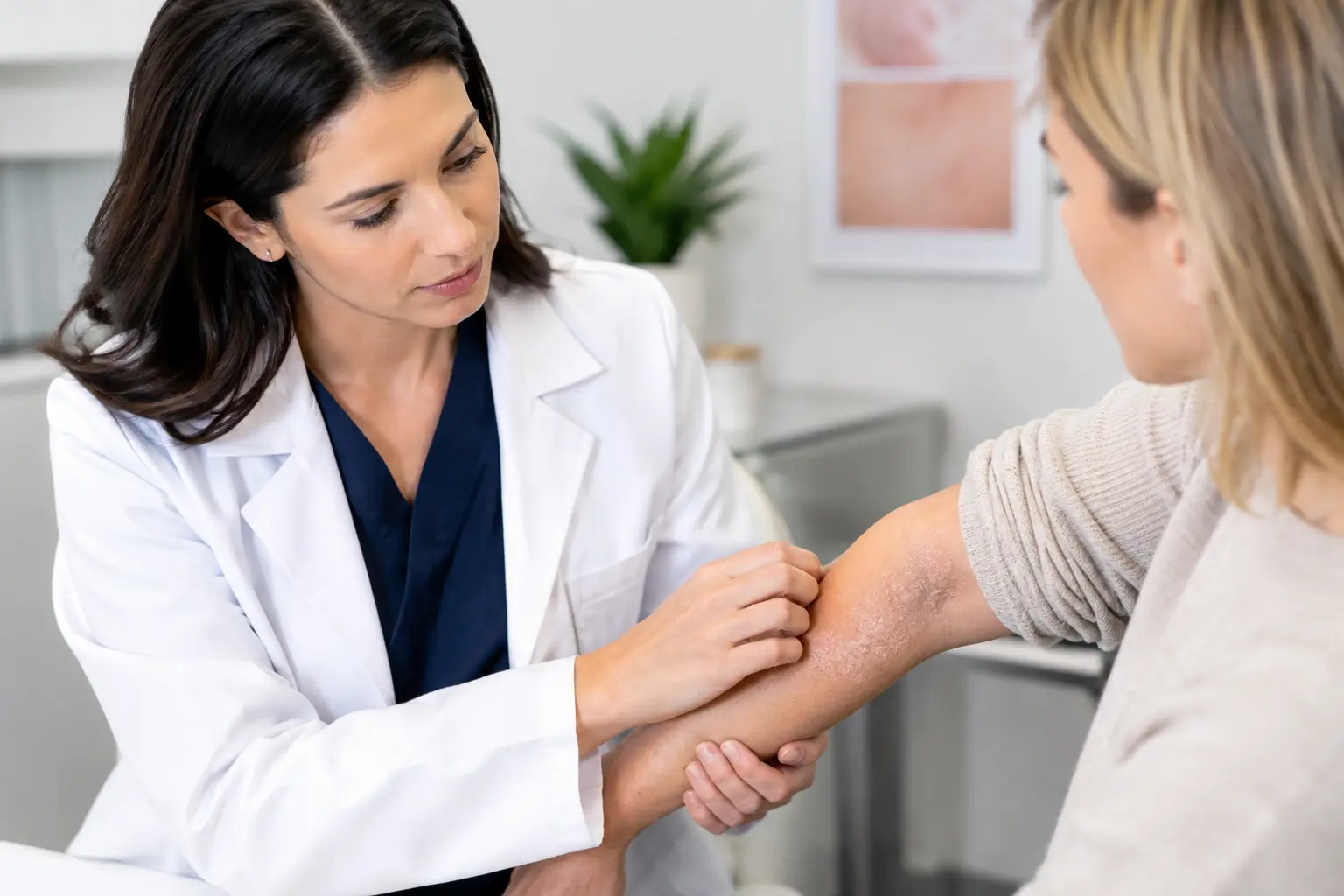
Psoriasis can feel unpredictable: a small patch on the elbow becomes harder to ignore, scalp flaking persists despite over-the-counter shampoos, or a flare arrives just before an important event. Finding the right psoriasis treatment Potomac dermatologist means looking beyond a quick fix and creating a plan that addresses your symptoms, triggers, lifestyle, and long-term skin health.
Psoriasis is a chronic immune-mediated condition, but chronic does not mean untreatable. With thoughtful dermatologic care, many patients achieve significantly clearer skin, less itching and discomfort, and greater confidence in daily life.
Why Psoriasis Needs Individualized Care
Psoriasis accelerates the skin-cell turnover cycle, causing cells to build up at the surface. The result may be well-defined, red, raised patches with silvery scale, although the condition can look different across skin tones and body areas. Some patients have a few limited plaques; others have extensive involvement that affects sleep, work, exercise, and self-esteem.
Plaque psoriasis is the most common form, often appearing on the knees, elbows, scalp, lower back, hands, or feet. However, psoriasis may also affect skin folds, nails, or the palms and soles. Nail pitting, thickening, separation from the nail bed, and stubborn scalp scaling can be particularly frustrating because they are highly visible and may not respond to the same approach used for a small body plaque.
A dermatologist also considers whether joint symptoms could signal psoriatic arthritis. Persistent joint pain, swelling, stiffness in the morning, heel pain, or a swollen finger or toe deserves prompt attention. Skin clearance matters, but protecting joint health matters just as much.
What Happens at a Psoriasis Appointment
An effective appointment starts with a precise diagnosis. Psoriasis can resemble eczema, seborrheic dermatitis, contact dermatitis, fungal infection, or other inflammatory rashes. Your clinician will examine the location, pattern, and character of your symptoms, review your personal and family history, and ask about medications, recent illnesses, stress, and other possible triggers.
The conversation should also cover the real-life effect of psoriasis. A small patch may be medically limited but still deeply bothersome if it affects the scalp, hands, face, or intimate areas. Conversely, widespread plaques that are not painful or itchy may call for a different treatment discussion than a flare that disrupts sleep every night.
At McLean & Potomac Dermatology and Skincare Center, care is guided by the principle that your skin deserves an approach as individual as your concerns. Treatment planning may include follow-up visits to assess progress and adjust therapy rather than assuming the first option will be the final answer.
Psoriasis Treatment Options in Potomac
The best treatment depends on the extent and location of psoriasis, the severity of itching or discomfort, previous treatment response, other medical conditions, and your preference for a topical routine, in-office therapy, or systemic medication. Many patients use more than one approach over time.
Prescription topical treatments
For mild or localized psoriasis, prescription topical medication is often the starting point. Topical corticosteroids can reduce inflammation and itch during a flare. Vitamin D analogs, retinoid-based treatments, calcineurin inhibitors for certain sensitive areas, and newer nonsteroidal topical medications may also be appropriate.
Topicals work well when used correctly, but application details matter. A medication for thick plaques on the elbows may not be right for thinner skin on the face or in skin folds. Scalp psoriasis may require a solution, foam, oil, or medicated shampoo rather than a cream. Your dermatologist can help simplify the regimen so it is realistic to maintain.
Phototherapy
Narrowband UVB phototherapy uses carefully controlled ultraviolet light to calm inflammation in the skin. It can be a valuable option for more widespread psoriasis, for patients who want to avoid or delay systemic medication, or when topical therapies alone have not delivered enough improvement.
Phototherapy requires consistency, often with a series of treatments over several weeks. It is not the same as tanning, and it should be supervised by a dermatology team that can set safe dosing and monitor response. For the right patient, it can provide meaningful clearing without the daily burden of treating many separate plaques.
Oral and injectable medications
Moderate to severe psoriasis may require treatment that works throughout the body. Oral medications and injectable biologic therapies target specific immune pathways involved in psoriasis. These options have changed expectations for many people living with persistent or widespread disease, including those who have not found relief with creams or light therapy.
Systemic treatment is a considered decision, not a one-size-fits-all escalation. Your dermatologist will review your medical history, current medications, pregnancy plans when relevant, infection risk, and necessary laboratory monitoring. Biologics can be highly effective, but they require ongoing follow-up and may involve insurance authorization. The right choice balances expected results with safety, convenience, and your comfort with the treatment plan.
Treating the Factors That Can Fuel a Flare
Psoriasis is not caused by poor hygiene, and it is not contagious. Still, certain factors can worsen symptoms or make flares more frequent. Illnesses such as strep throat, skin injury, emotional stress, smoking, alcohol use, and some medications can play a role for some individuals.
A practical plan may include gentle, fragrance-free skin care, consistent moisturizing, prompt treatment of skin infections, and strategies to avoid picking or scratching plaques. These measures do not replace prescription treatment, but they can support the skin barrier and reduce avoidable irritation.
Weight changes, sleep quality, and metabolic health may also be part of the discussion. Psoriasis is associated with certain inflammatory and cardiometabolic conditions, which is one reason a comprehensive medical history is valuable. This does not mean every flare has a single identifiable cause. Often, the most useful goal is recognizing patterns and building a plan that remains effective when life is not perfectly predictable.
Special Considerations for Scalp, Nails, and Sensitive Areas
Some psoriasis locations require more specialized attention. Scalp psoriasis can be difficult because hair makes regular application challenging, and visible flakes may affect confidence in professional and social settings. Treatment may combine medicated shampoos with targeted prescription solutions, foams, or other formulations that reach the scalp efficiently.
Nail psoriasis often improves slowly because nails grow slowly. Patience and regular monitoring are essential, particularly when nail changes interfere with typing, grooming, exercise, or other daily tasks. A dermatologist can also distinguish nail psoriasis from fungal infection, since the two conditions may look similar and can occasionally occur together.
Psoriasis in the face, groin, underarms, or other skin folds needs a careful approach. These areas are prone to irritation and may be more susceptible to side effects from certain medications. Treatment should be effective enough to control inflammation while respecting the sensitivity of the skin.
When to See a Potomac Dermatologist for Psoriasis
Schedule an evaluation if a rash is persistent, spreading, painful, cracked, bleeding, or not responding to nonprescription products. It is also wise to seek care when psoriasis interferes with sleep, limits what you wear, causes embarrassment, affects your nails or scalp, or is accompanied by joint pain or stiffness.
You do not need to wait until psoriasis becomes severe to pursue treatment. Early care can clarify the diagnosis, reduce the trial-and-error cycle, and give you a reliable strategy for future flares. Clearer skin is not always an overnight outcome, but a well-chosen plan can make psoriasis feel far less in control of your day.