
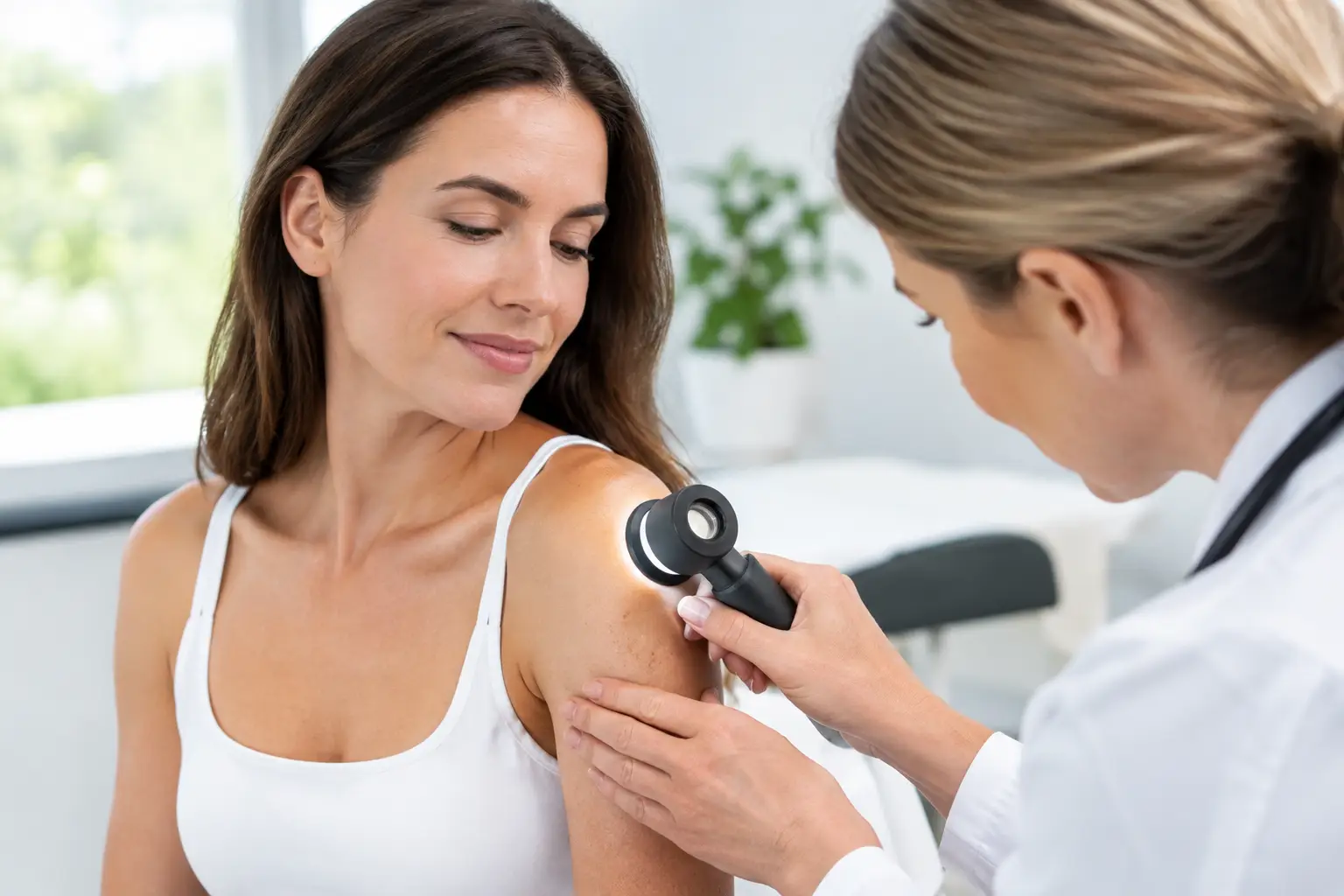
A new spot on your shoulder may be nothing more than a harmless sun spot. A mole that has quietly changed shape, color, or behavior is worth a closer look. Skin cancer screening in McLean offers a focused, physician-guided way to evaluate what is normal for your skin and what may need attention before a concern becomes more serious.
For people in Northern Virginia and the Washington, DC area, regular skin checks are a practical part of long-term health care, especially after years of summer sun, outdoor sports, vacations, or incidental daily exposure. Early evaluation can make a meaningful difference because many skin cancers are highly treatable when found early.
What Happens During Skin Cancer Screening in McLean
A professional skin cancer screening is more than a quick glance at one mole. Your dermatology provider reviews your personal and family history, asks about spots that concern you, and examines the skin for changes that may not be obvious to you.
Depending on your history and needs, the exam may include skin that is easy to overlook: the scalp, ears, back, chest, between the toes, soles of the feet, and areas that receive intermittent sun exposure. You may be asked about prior blistering sunburns, tanning bed use, medications that affect the immune system, previous biopsies, and any family history of melanoma or other skin cancers.
The visit is also a chance to establish a baseline. Many adults have numerous freckles, moles, or sun spots, and not every irregular-looking mark is dangerous. A trained dermatology professional considers the full picture, including your skin type, the appearance of the lesion, its location, and whether it has changed over time.
If a spot warrants further evaluation, your provider may recommend close monitoring, specialized imaging, or a biopsy. A biopsy removes a small sample of tissue so it can be reviewed under a microscope. While the word can feel intimidating, it is a common diagnostic step and provides the clarity needed to plan appropriate care.
Who Should Schedule a Skin Check?
Every adult can benefit from knowing their skin and seeking evaluation for changes. Still, some people should be particularly proactive about regular skin cancer screening.
Higher-risk factors include a personal history of skin cancer, a close relative with melanoma, many moles, fair skin that burns easily, a history of significant sunburns, frequent outdoor exposure, and prior indoor tanning. People who take immunosuppressive medications or have had an organ transplant may also need more frequent surveillance.
Risk does not belong only to people with fair skin. Skin cancer can occur in every skin tone. In deeper skin tones, certain cancers may appear in less sun-exposed areas, including the palms, soles, nail beds, or inside the mouth, and may be detected later when routine checks are delayed. The right screening interval depends on your individual history rather than a one-size-fits-all calendar.
For some patients, an annual full-body skin exam is appropriate. For others, especially those with a prior melanoma or multiple nonmelanoma skin cancers, a dermatologist may recommend visits every three to six months. If you have no concerning history, your provider can advise whether periodic professional exams, careful self-checks, or both make the most sense.
Changes That Deserve Prompt Attention
Do not wait for your next routine appointment if a spot is changing quickly, bleeding without a clear injury, repeatedly scabbing, itching persistently, or failing to heal. A lesion that looks distinctly different from the other marks on your body also deserves evaluation. Dermatologists sometimes call this the “ugly duckling” sign: one spot simply does not resemble the rest.
The ABCDE guide can be helpful for reviewing pigmented lesions at home. Look for asymmetry, irregular borders, uneven or multiple colors, a diameter larger than about one-quarter inch, and evolution in size, shape, color, or symptoms. These signs can raise concern for melanoma, but they are not the only indicators of skin cancer.
Basal cell carcinoma and squamous cell carcinoma can look quite different. They may appear as a pearly or translucent bump, a pink patch, a rough scaly area, a sore that returns after healing, or a wart-like growth. A change does not automatically mean cancer, but it does mean the spot should be assessed rather than guessed at.
Check Areas You Cannot Easily See
A monthly self-exam is most useful when it is thorough. Use a full-length mirror and a hand mirror, or ask a partner to check the scalp, back, and other difficult-to-view areas. Photographing a spot that your provider has said to monitor can also help you recognize true change, although photos should never replace an in-person assessment when a lesion is concerning.
Pay attention to your nails as well. A new or widening dark streak, pigment extending onto the surrounding skin, or a growth beneath the nail should be examined. These findings have many possible causes, but they should not be dismissed simply because they are not on a traditionally sun-exposed area.
Why Early Detection Changes the Conversation
Skin cancer is the most common cancer in the United States, but its outcomes vary widely by type and timing of diagnosis. Many basal cell and squamous cell carcinomas can be treated effectively with office-based procedures or dermatologic surgery when caught early. Melanoma requires prompt attention because it can spread beyond the skin, yet early-stage melanoma is often highly curable.
Early detection may also affect the scope of treatment. Addressing a small lesion can mean a more limited procedure, less complex repair, and a smaller scar than treating a lesion that has grown deeper or larger. Location matters, too. A suspicious spot on the nose, eyelid, lips, ears, hands, or lower legs may require especially thoughtful planning to protect both health and function.
At McLean & Potomac Dermatology and Skincare Center, board-certified dermatologists and credentialed providers can coordinate evaluation, biopsy, treatment planning, and follow-up care within a comprehensive dermatology setting. This continuity matters when a lesion needs more than observation, whether the next step is surgical treatment, ongoing surveillance, or education about reducing future risk.
Preparing for Your Appointment
Arrive ready to discuss anything new, changing, symptomatic, or difficult to monitor. If you have photos showing how a lesion has evolved, bring them. It can also help to make a brief note of previous biopsies, skin cancer diagnoses, medications, and family history.
On the day of a full-body exam, avoid heavy makeup, opaque nail polish, and self-tanner if possible, as these can make careful evaluation more difficult. Wear clothing that is easy to remove and be candid about every area you want examined. Dermatology visits are medical appointments, and no concern is too small or too awkward to mention.
If a biopsy is recommended, ask what the procedure involves, how the site should be cared for, when pathology results are expected, and what treatment may be needed depending on the findings. Clear expectations can make the process feel far more manageable.
Screening Works Best With Everyday Prevention
A skin check does not replace sun protection, and sun protection does not replace a skin check. The strongest approach includes both. Use a broad-spectrum, water-resistant sunscreen with SPF 30 or higher, apply it generously, and reapply during prolonged outdoor time. Wide-brimmed hats, sunglasses, protective clothing, and shade are especially valuable during midday hours.
Sun damage is cumulative, not limited to beach days. Driving, walking the dog, attending a child’s game, and sitting near windows can all add to exposure over time. At the same time, sunscreen use should not create a false sense that every future skin cancer can be prevented. Genetics, immune status, and past exposure all play a role, which is why attentive surveillance remains valuable.
Your skin tells a history of sun exposure, genetics, and change. A professional exam gives that history the clinical attention it deserves – and gives you a clear next step when a spot does not look or feel right.