
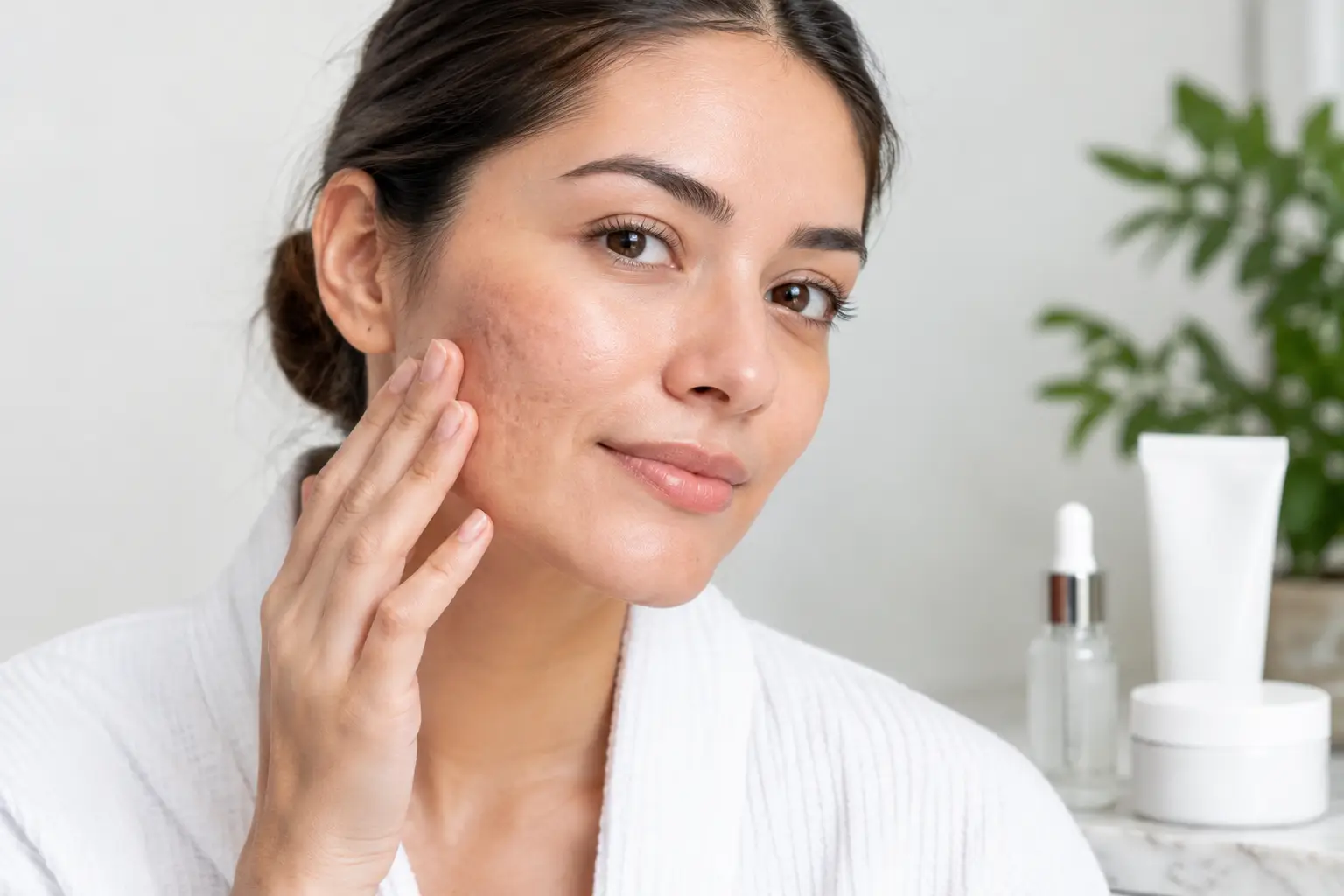
Acne can clear and still leave a reminder behind: a shadow that lingers after a breakout, a roughened patch that catches the light, or an indentation that makeup cannot quite smooth. Effective acne scar treatments begin by identifying what remains in the skin, because redness, dark marks, and true textural scars respond to very different approaches.
At McLean + Potomac Dermatology and Skincare Center, treatment planning is grounded in a detailed skin evaluation, your history of acne, your skin tone, and the amount of downtime that works for your life. The goal is not to chase a single procedure. It is to create a thoughtful plan that improves the skin safely and naturally over time.
Acne Scar Treatments Start With the Right Diagnosis
Not every mark after acne is technically a scar. Post-inflammatory erythema is the pink or red discoloration that may remain after a blemish heals. Post-inflammatory hyperpigmentation appears as brown, gray, or darker spots, particularly in deeper skin tones. These marks can fade, but they are usually pigment or vascular concerns rather than changes in the skin’s underlying structure.
True acne scars involve a change in collagen. They may be depressed, raised, or uneven in texture. Depressed scars are the most common and generally fall into three categories: ice-pick scars, which are narrow and deep; boxcar scars, which have more defined edges; and rolling scars, which create broad, wave-like unevenness. Raised scars and keloids require a different medical approach.
This distinction matters. IPL may help address visible redness and uneven pigment in appropriate patients, but it will not lift a tethered rolling scar. A resurfacing treatment may improve texture, but it may not be the first choice for a very narrow ice-pick scar. Precision produces better outcomes than a one-size-fits-all solution.
Which Acne Scar Treatment Is Right for You?
The best option depends on your scar pattern, skin tone, active acne status, lifestyle, and goals. Most patients see the most meaningful improvement from a customized combination of treatments rather than one appointment.
Fractional laser resurfacing for texture and tone
Fractional laser treatments create controlled columns of treatment in the skin to stimulate collagen remodeling. As new collagen develops, depressed scars can become softer and the overall surface of the skin can look smoother. Depending on the device and settings selected, laser resurfacing may also improve fine lines, sun damage, and uneven tone.
More intensive resurfacing can produce more visible improvement per treatment, but it also carries greater downtime and requires careful aftercare. Gentler fractional approaches generally involve less recovery, although a series may be recommended. For patients prone to pigmentation changes, the choice of laser, settings, and skin preparation should be especially deliberate.
Microneedling for gradual collagen renewal
Microneedling uses fine needles to create controlled microchannels in the skin. This process encourages the skin’s natural repair response and collagen production. It is often a strong option for mild to moderate textural scarring, enlarged pores, and overall skin quality.
Results appear gradually rather than overnight. A series of sessions is often needed, spaced to give the skin time to remodel. Microneedling can be a practical choice for patients seeking meaningful improvement with relatively limited downtime, but it may not fully correct deep, sharply edged scars on its own.
Subcision for tethered rolling scars
Some depressed scars are held down by fibrous bands beneath the skin. In these cases, treating the surface alone may not create the improvement a patient wants. Subcision is a technique in which a dermatologist carefully releases these tethering bands below the scar, allowing the skin to lift more naturally.
Bruising and swelling can occur after subcision, and the treatment is not right for every scar type. When appropriate, it may be combined with microneedling, laser resurfacing, or carefully placed filler to support a smoother contour.
Fillers for select depressed scars
Dermal filler can provide immediate support beneath certain broad, depressed scars. This is often most useful for rolling or boxcar scars that respond well to volume restoration. Results and longevity vary based on the filler selected, the scar pattern, and individual metabolism.
Filler is not a replacement for collagen-stimulating treatments, and it is not typically the best answer for every area of scarring. It can, however, be a valuable part of a refined treatment plan when a patient wants improvement in contour with little downtime.
Targeted techniques for narrow or raised scars
Very narrow, deep ice-pick scars may need a focused approach, such as a targeted chemical reconstruction technique or minor procedural treatment. Raised scars may be treated with options that help flatten and soften excessive scar tissue, including carefully selected injections or other dermatologist-directed therapies.
These concerns deserve expert assessment. Treating a raised scar as though it were an indentation, or using an overly aggressive procedure on skin with a tendency toward keloids, can create disappointing results.
Treating Dark Marks Alongside Acne Scars
Pigmentation and scars often coexist, particularly after inflammatory acne. Treating dark marks may include medical-grade topical skincare, chemical peels, laser or light-based therapy, and consistent sun protection. The right combination depends on your skin tone and whether discoloration is brown, red, or mixed.
Daily broad-spectrum sunscreen is not an optional extra during scar treatment. UV exposure can deepen discoloration, prolong healing, and make results less predictable. A dermatologist may also recommend a tailored skincare regimen to support the skin barrier and address pigment between procedures.
Why Active Acne Should Be Controlled First
It is difficult to make lasting progress on acne scars while new breakouts continue to form. Every inflammatory blemish has the potential to leave another mark or scar, which can undermine the investment of time and treatment.
For some patients, scar treatment can begin while mild acne is being managed. For others, it makes more sense to first stabilize breakouts with a medical acne plan. This may include topical medications, oral treatment, hormonal evaluation when appropriate, and acne-safe skincare. The timing should be individualized rather than automatic.
What Results and Recovery Really Look Like
Acne scar treatment is a process of improvement, not perfection. Collagen remodeling takes time, and the skin often continues to improve for weeks or months after a procedure. The number of treatments needed depends on scar depth, the types of scars present, and how much change you hope to see.
Recovery also varies. Some procedures may leave the skin pink, dry, or flaky for several days. More intensive resurfacing can require a longer period of visible healing. Your dermatology team should explain what to expect before treatment, including skincare instructions, activity restrictions if needed, and when makeup can be safely resumed.
A sophisticated plan also respects your calendar. Patients may choose a lower-downtime series around work, social events, and travel, while others prefer a more intensive treatment when they have time to recover. Neither approach is universally better. The right choice is the one that balances safety, desired improvement, and your real life.
Choosing Care for Acne Scars in the DC Area
Acne scars can affect how you feel in photographs, professional settings, and everyday moments, even when no one else sees them as clearly as you do. A consultation with a board-certified dermatologist or credentialed dermatology provider offers a clearer path forward than trying to match your skin to a trending treatment.
Your skin deserves an approach that considers its history, its color, its sensitivity, and your definition of progress. With the right diagnosis and a carefully selected treatment plan, smoother-looking skin can become a realistic, confidence-building goal.