
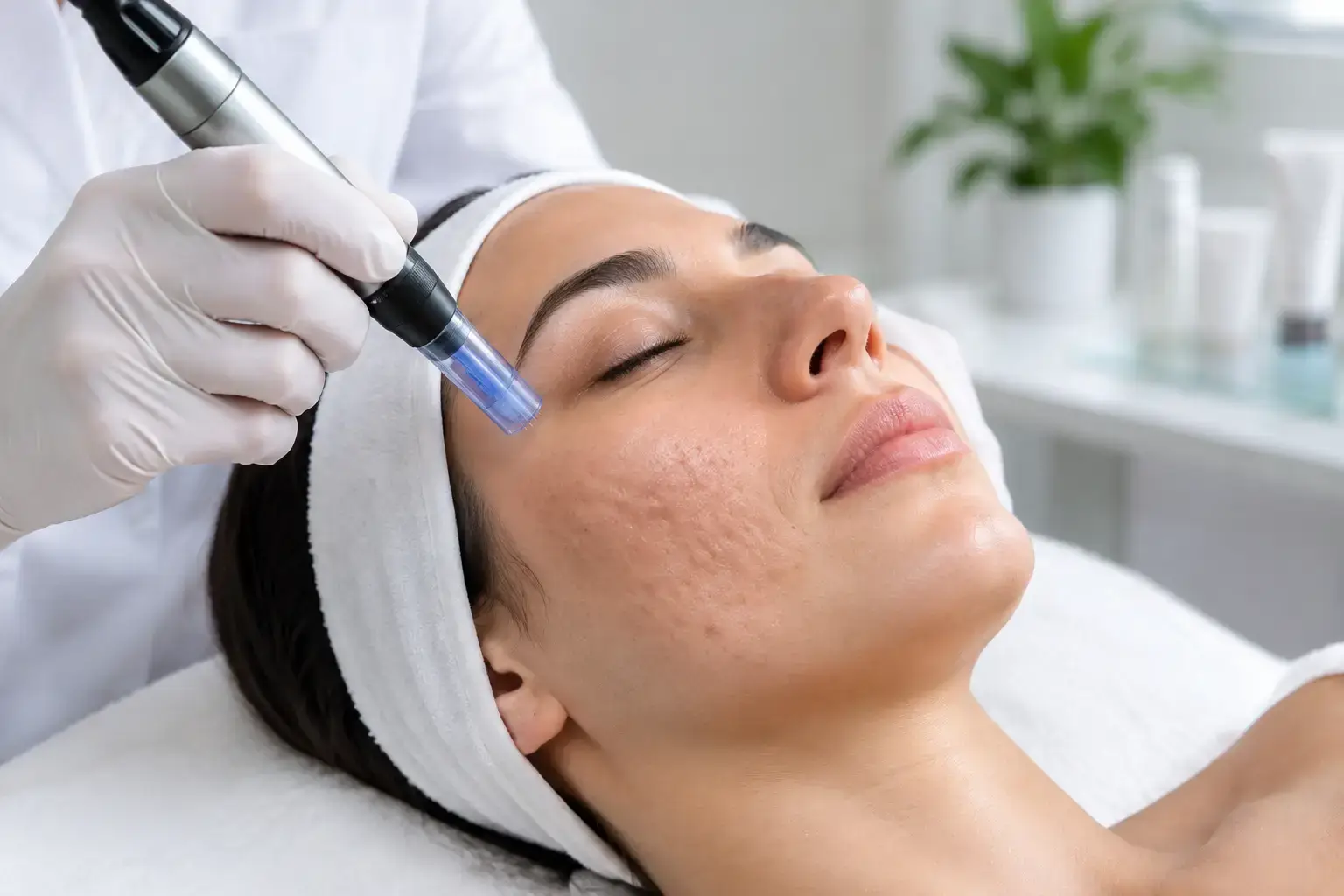
Acne may be gone, yet the reminders can remain long after active breakouts settle. For patients considering microneedling acne scars treatment, the central question is not simply whether it works, but whether it is the right approach for their specific scar pattern, skin tone, and goals. A thoughtful evaluation matters because acne scars are not all the same, and meaningful improvement usually comes from a personalized plan rather than a one-size-fits-all procedure.
How Microneedling Helps Acne Scars
Microneedling uses a medical device with fine, sterile needles to create controlled microchannels in the skin. This precise injury signals the body’s natural repair process, encouraging collagen and elastin production over time. As the skin rebuilds, certain depressed scars can appear softer, smoother, and less noticeable.
The treatment is most often used for atrophic acne scars, which are scars that sit below the surrounding skin. These may include broad, gently sloped rolling scars and some boxcar scars with more defined edges. Collagen remodeling can improve overall texture as well, which is why patients may notice their skin looks more refined even beyond the areas of deepest scarring.
Microneedling does not remove scar tissue in a single appointment, and it cannot guarantee perfectly smooth skin. It is a gradual collagen-stimulating treatment. That distinction is valuable: realistic expectations help patients recognize progress as it develops and make decisions about whether combination care would offer a better result.
Which Acne Scars Respond Best?
A careful skin examination determines whether microneedling is likely to be an effective choice. Rolling scars often respond well because they are caused in part by fibrous bands that pull the skin downward. In some cases, microneedling may be paired with subcision, a procedure that releases those tethering bands, for a more complete improvement.
Shallow boxcar scars can also improve, particularly when the goal is to soften their borders and blend them with surrounding skin. Deep, narrow ice-pick scars are less likely to respond substantially to microneedling alone. Those scars may require a different targeted approach, such as a chemical reconstruction technique or another procedure selected by a dermatologist.
Color changes deserve separate attention. Red, brown, or purple marks left after acne are not always true scars. They may represent post-inflammatory redness or hyperpigmentation, which can be treated differently. Microneedling may help some aspects of uneven tone, but a plan may also include prescription skincare, chemical peels, IPL, or laser-based treatment depending on the concern and skin type.
Why a Dermatology Evaluation Comes First
The same acne history can leave very different marks from one person to another. Skin tone, current acne activity, history of pigmentation, tendency to develop raised scars, and use of medications all affect treatment planning. Active inflammatory acne should generally be controlled before scar-focused treatment begins. Creating microchannels through areas of active breakouts can aggravate inflammation and does not address the source of new scars.
Patients with deeper skin tones often make excellent candidates for microneedling, but treatment settings and pre- and post-procedure care should be selected thoughtfully. Any procedure that creates inflammation can carry a risk of post-inflammatory hyperpigmentation. A clinician may recommend pigment-supporting skincare, a more conservative initial treatment, or an alternate procedure when appropriate.
A medical assessment is also the time to discuss medications and health history. Certain acne medications, blood thinners, immune-suppressing medications, frequent cold sores, pregnancy, and a history of keloids may change the timing or suitability of treatment. Professional guidance is especially important for patients considering at-home devices. Consumer rollers and pens cannot offer the sterility, depth control, or individualized clinical oversight of an in-office procedure.
What a Microneedling Appointment Is Like
Before treatment, the skin is cleansed and a topical numbing cream is applied to improve comfort. Once the skin is numb, the clinician guides the microneedling device across the treatment area at a depth selected for the location and type of scarring. The procedure itself is typically efficient, though the full visit includes time for numbing and post-treatment instructions.
Most patients describe pressure, vibration, or a scratchy sensation rather than significant pain. Immediately afterward, skin commonly looks pink to red and may feel warm, similar to a sunburn. Pinpoint bleeding can occur during treatment and is expected with certain settings. The degree of redness depends on treatment depth, skin sensitivity, and the areas treated.
At McLean + Potomac Dermatology and Skincare Center, microneedling is approached as part of a broader aesthetic and medical dermatology plan. This allows patients to receive guidance not only on the procedure itself, but also on acne control, pigmentation, sun protection, and complementary options when scars require more than one modality.
The First Week of Recovery
Redness and mild swelling usually improve within one to three days, although some patients experience dryness, tightness, or light flaking for several days afterward. Your clinician may advise avoiding makeup for a short period, especially on the day of treatment, and using only gentle, approved products while the skin barrier recovers.
For the first several days, avoid retinoids, exfoliating acids, scrubs, and other potentially irritating active ingredients unless your clinician directs otherwise. Heat exposure from hot yoga, saunas, steam rooms, and strenuous workouts may also prolong redness. Sun protection is not optional after microneedling. Daily broad-spectrum sunscreen and physical sun avoidance help protect healing skin and reduce the chance of unwanted pigment changes.
Do not pick at flaking skin or attempt to speed recovery with aggressive exfoliation. The visible recovery may be brief, but collagen remodeling continues underneath the surface for weeks.
How Many Treatments Are Needed?
Most patients need a series rather than a single session. Three to six treatments, usually spaced about four to six weeks apart, is a common starting framework, but the right number depends on scar severity, the treatment method, and how the skin responds. More deeply etched scars may need additional treatments or combination therapy.
Results emerge gradually. Some patients see an early glow or smoother texture after the first session, while scar remodeling becomes more apparent over several months. Before-and-after photographs taken in consistent lighting can be more useful than a day-to-day mirror check, since the change is often incremental.
It is reasonable to expect improvement, not perfection. A well-designed treatment plan aims to make scars less visible in normal conversation, photographs, and everyday lighting while preserving a natural skin texture.
When Combination Treatment Makes Sense
Microneedling can be a strong foundation for acne-scar improvement, but it is not always the entire answer. A dermatologist may combine or sequence treatments based on what is holding the skin back. Tethered rolling scars may benefit from subcision. Very distinct depressions may respond to filler in select cases. Textural irregularities, redness, and pigment may be better addressed with fractional laser resurfacing, IPL, chemical peels, or prescription skincare.
Timing matters. Combining every treatment at once is not necessarily better and can increase irritation or downtime. A measured plan allows the skin to heal, helps identify what is producing the best response, and keeps treatment aligned with your schedule and tolerance for recovery.
Choosing Care for Microneedling Acne Scars
Microneedling is not merely a cosmetic add-on when acne scars affect how you feel in your skin. It is a procedure that benefits from clinical judgment, meticulous technique, and a clear understanding of scar biology. Look for a practice where medical and aesthetic expertise work together, particularly if you have ongoing acne, pigmentation concerns, sensitive skin, or scars that have not improved with previous treatments.
The right plan begins with an honest conversation about what you see, what you have already tried, and what level of improvement would feel meaningful to you. With patient, well-directed care, smoother texture and renewed confidence can become a realistic next step.